The desire to try something new marked the beginning of a transformation for Mr. Yusuf Maran, an Indigenous Papuan (OAP) farmer from Prafi District. Previously engaged in growing cassava (locally known as kasbi) and bananas, as well as working as a fisherman, he is now steadily developing his vegetable farming business with support from Yayasan Bina Tani Sejahtera (YBTS).
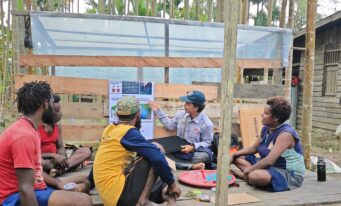
Mr. Yusuf had long been interested in vegetable cultivation. However, limited knowledge and hesitation to ask questions prevented him from pursuing this interest. The opportunity finally came when he met YBTS staff and began receiving agricultural guidance and hands-on training.
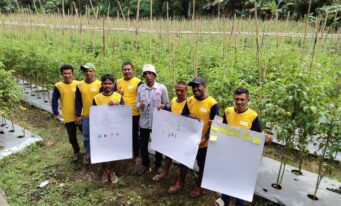
Through these activities, he learned various cultivation techniques, including land preparation, nursery management, fertilization, pest and disease management, post-harvest handling, and marketing. “I used to grow only cassava and bananas. I had actually wanted to grow vegetables for a long time, but I didn’t know how. Through YBTS’s guidance, I started learning everything from land preparation to crop maintenance. Now, I feel more confident about growing vegetables and developing my own farming business,” he shared. With this newfound knowledge, Mr. Yusuf began applying what he had learned to his own farm.
Six Planting Seasons, Valuable Lessons
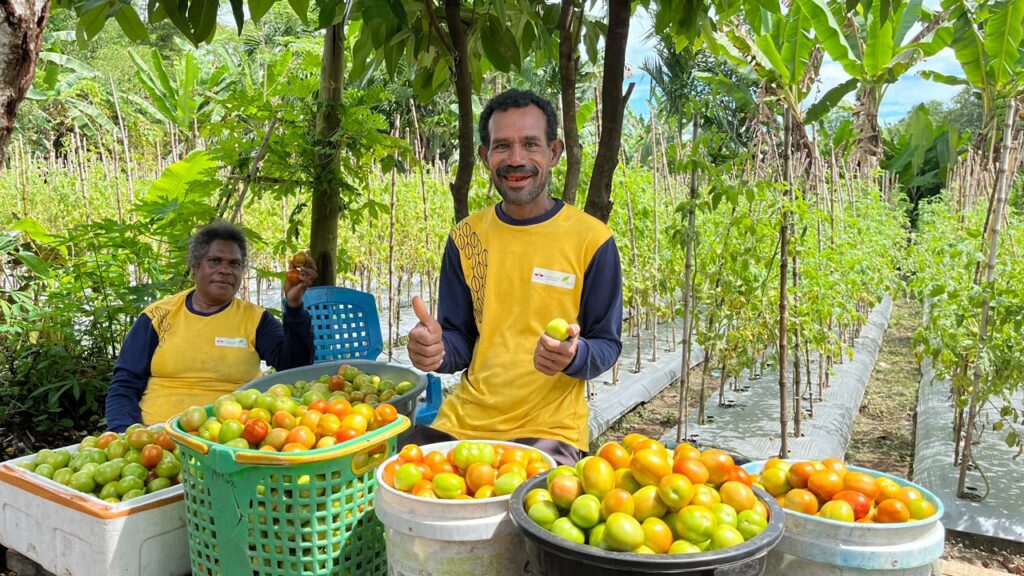
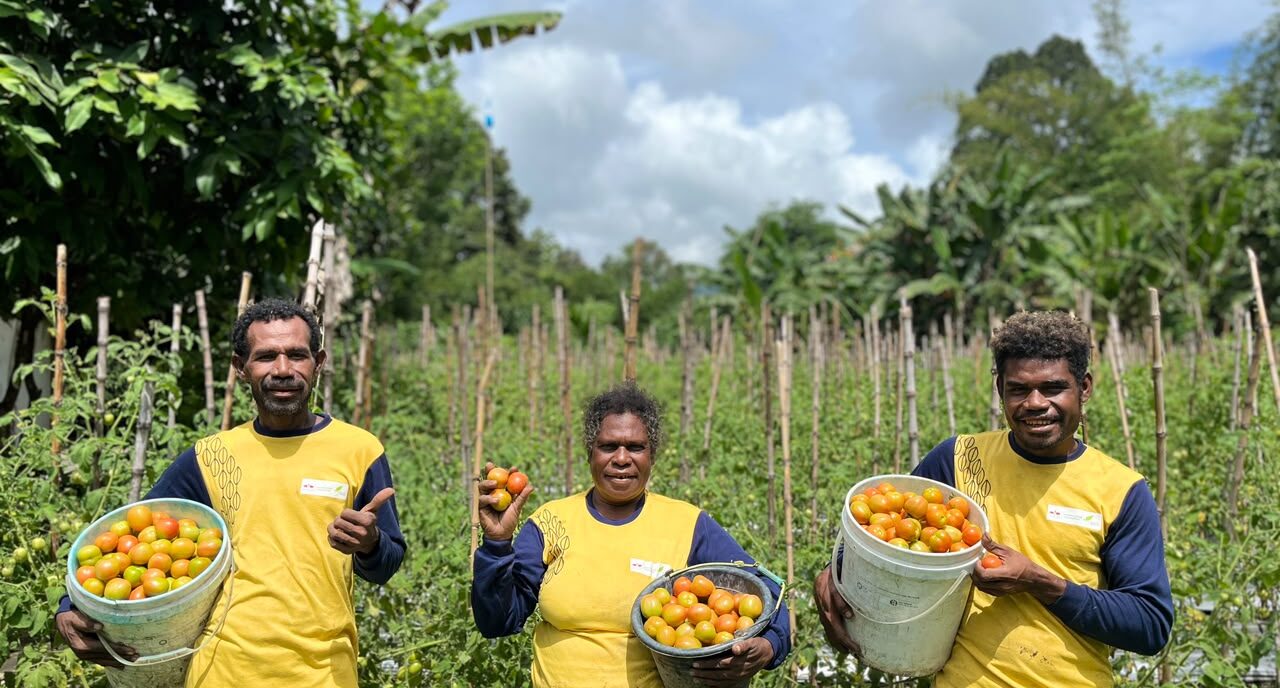
His farming journey began with planting Servo tomato in his first planting season (PS). He successfully harvested 812 kg of tomatoes. However, low market prices meant that the harvest did not generate the expected profit. In the second planting season, he tried growing long beans, followed by green beans in the third season. Although both crops produced harvests, unfavorable market prices remained a challenge.
During the fourth planting season, Mr. Yusuf returned to growing Servo tomatoes. This time, extreme weather affected production. Nevertheless, market conditions were more favorable, with better tomato prices offering a more positive financial outcome. These experiences helped him understand the importance of considering market conditions and planting schedules when selecting crops. In his fifth planting season, he began applying crop rotation strategies by choosing Guarda long beans. This decision brought encouraging results, both in terms of production and selling prices.
Now, Mr. Yusuf is preparing for his sixth planting season, with plans to grow sweet corn and green beans. What initially began as a personal interest has gradually developed into an important source of livelihood for his family.
Knowledge That Opens New Opportunities
The changes in Mr. Yusuf’s farming journey are reflected not only in his improved cultivation skills but also in the economic benefits for his family. Income from vegetable sales has helped him cover his children’s education expenses, meet daily household needs, and purchase farming equipment to support future cultivation activities. “The income from vegetable farming has helped me provide for my family, pay for my children’s education, and purchase farming equipment. I want to keep learning and developing my farming business so that I can achieve better results and provide a better life for my family,” he concluded.