Field Visit in Sorong, Strengthening Farmers’ Learning in Papua
Uploaded
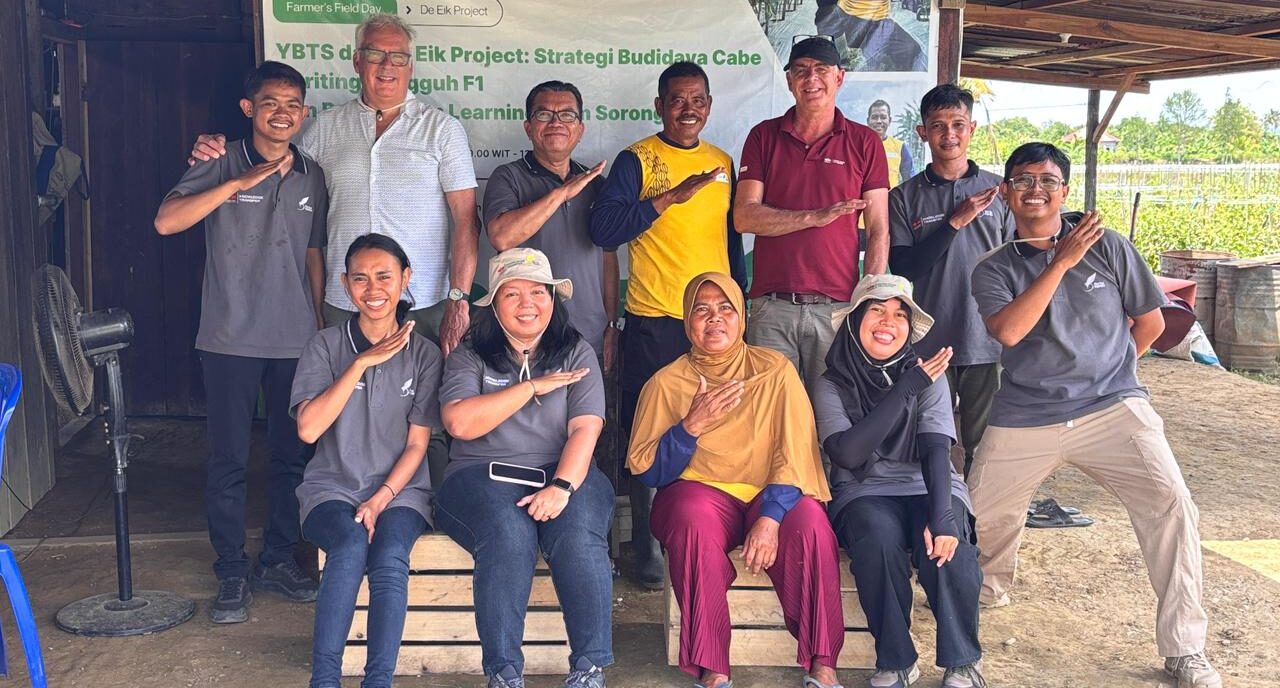
A field visit was conducted in Sorong, Southwest Papua, as part of the program “Enhancing Smallholder Farmers’ Income and Livelihoods with Profitable Vegetable Production Practices in Papua, Indonesia,” supported by East-West Seed Knowledge Transfer (EWS-KT) and Stichting De Eik. The activity was carried out by Yayasan Bina Tani Sejahtera (YBTS) together with Stuart Morris (Executive Director, East-West Seed Knowledge Transfer) and Flip Van Koesveld (Board Advisor, East-West Seed Knowledge Transfer) to observe the program’s progress and farmers’ learning processes on the ground.
The visit was also attended by Edwin S. Saragih (Chairman of YBTS) and Ellyda Chaterina Hutabarat (Assistant Manager of YBTS) along with the program team who have been working closely with farmers in the field.
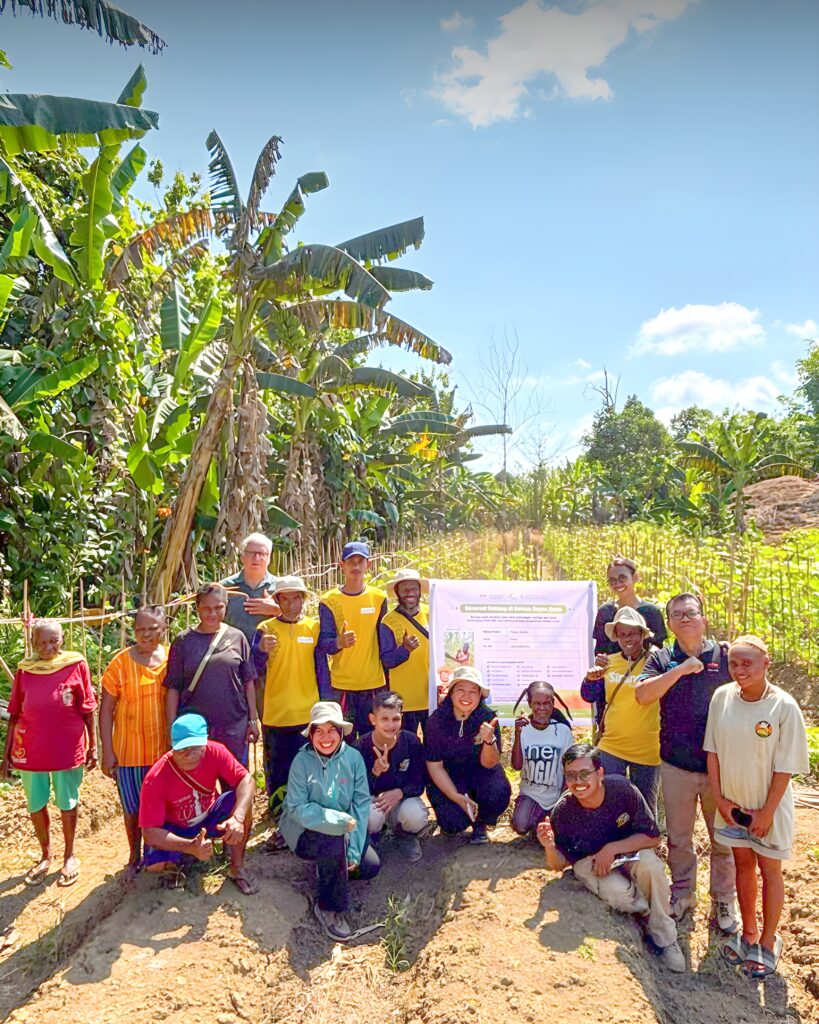
During the activity, the team visited several demonstration plots and Learning Farms, which serve as practical learning spaces for farmers to apply improved vegetable cultivation practices, particularly Good Agricultural Practices (GAP). Moving from one field to another, the team engaged directly with farmers to understand the progress achieved as well as the challenges they still face.
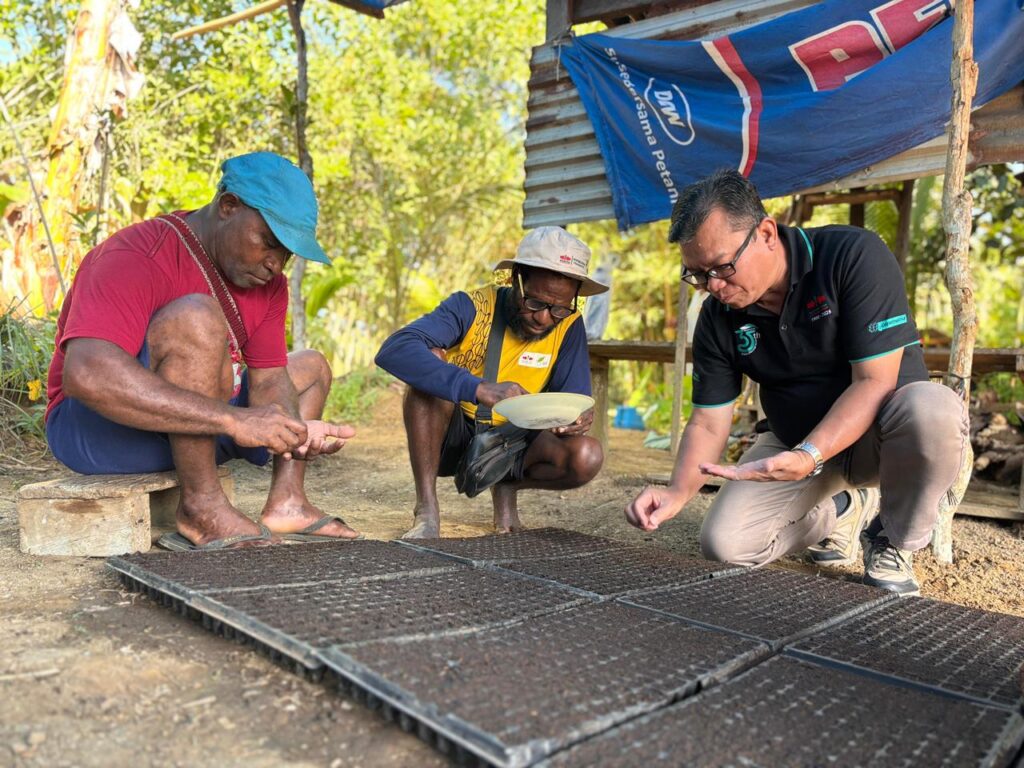
Farmers and Edwin S. Saragih (Chariman of YBTS) practice seed sowing using seedling trays as part of hands-on learning in vegetable cultivation.
Encouraging progress has been observed. Through this program, farmers are demonstrating a stronger understanding of vegetable cultivation techniques and greater motivation to further develop their farming businesses. The learning process has also brought together indigenous Papuan farmers and transmigrant farmers, enabling them to share experiences and strengthen one another.
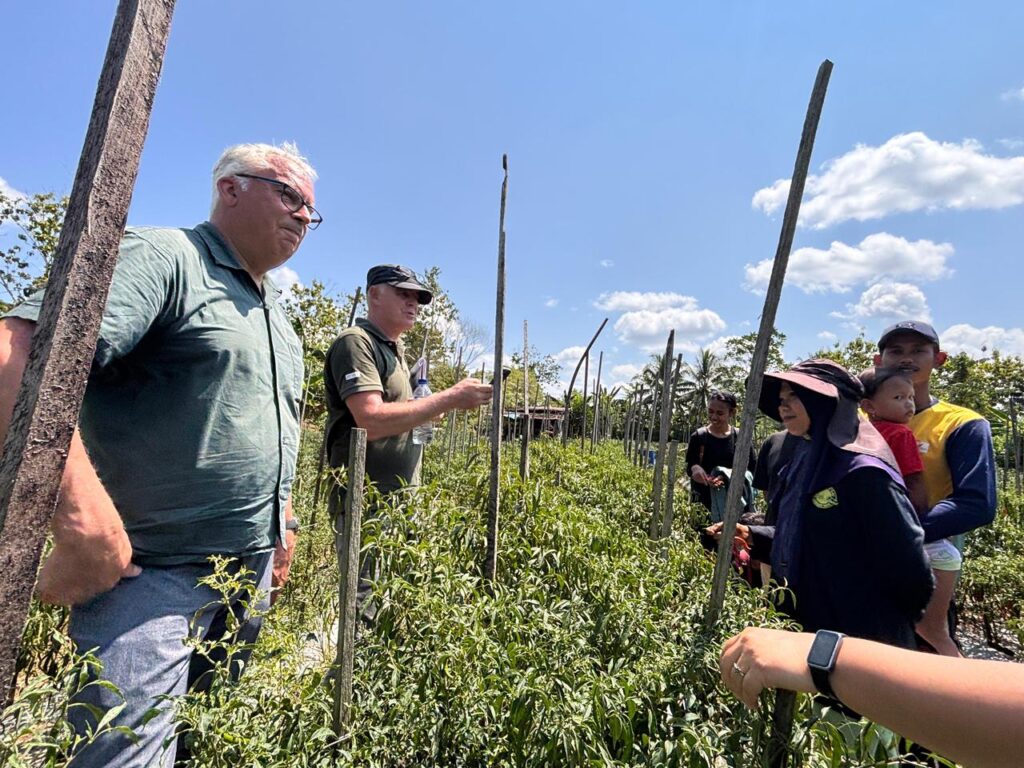
Field discussions allow farmers and partners to observe crop conditions directly and exchange practical insights on improving vegetable production.
One inspiring story comes from Ahmad, a transmigrant farmer who previously worked in construction with a monthly income of around IDR 3 million. After applying GAP in vegetable cultivation, his yields increased by around 80 percent, and his farm has now become a learning site for other farmers nearby.
A similar transformation is experienced by Yoppy, an indigenous Papuan farmer who previously relied on staple crops such as banana and cassava. After diversifying into vegetables such as sweet corn, tomatoes, and curly chili, his family’s income has nearly doubled. He now actively encourages neighboring farmers to learn and grow together.
As Yoppy’s wife simply expressed, “Now there is always smoke coming from the kitchen.” A simple statement that reflects improved food security and renewed hope for their family.
Collaboration between farmers and partners continues to strengthen vegetable farming practices and support smallholder livelihoods in Papua.
Through collaboration, consistent mentoring, and farmers’ willingness to learn, small steps taken in the fields are gradually creating meaningful change for farming families in Papua.
Other Intergrated Livelihood
Building Self-Reliance Through Agricultural at Namlea Correctional Facility
Uploaded
YBTS, in collaboration with the Buru District Agricultural Office, held a Farmers Field Day (FFD) at the Class III Namlea Correctional Facility to support inmate rehabilitation and self-reliance. The program provided hands-on learning on quality seeds, pest management, and proper crop care, equipping inmates with practical agricultural skills they can use both inside the facility and upon reentering society.
Farming Against the Odds, Growing Vegetables Doesn’t Mean Giving In to Nature
Uploaded
Amid unpredictable weather and rocky soil, Pak Baharudin continues to farm with unwavering dedication. With support from YBTS, he now applies more sustainable and efficient farming practices. His story proves that growing vegetables doesn’t mean giving in to nature’s challenges.
15 Years of YBTS: One and a Half Decades with Indonesian Farmers
Uploaded
Lima belas tahun sejak didirikan, Yayasan Bina Tani Sejahtera (YBTS) terus berkomitmen memberdayakan petani Indonesia melalui benih berkualitas, pendampingan intensif, dan pengembangan komunitas yang kuat. Tonggak penting ini ditandai dengan pelaksanaan All Team Meeting YBTS 2024 pada tanggal 23–27 September dengan tema “Go To The Next Level.” Kegiatan dimulai di EWINDO, Purwakarta, dengan sambutan apresiatif dari pimpinan serta pemotongan tumpeng ulang tahun ke-15 sebagai simbol rasa syukur, dilanjutkan dengan sesi pembelajaran mendalam seputar kualitas benih, pengendalian hama, dan tantangan nyata di lapangan bersama para pakar EWINDO. Sesi refleksi internal, kunjungan lapangan, serta kegiatan team building yang dilandasi oleh nilai-nilai KAKA (Kesadaran, Aktualisasi Diri, Keterlibatan, dan Akuntabilitas) turut memperkuat semangat kebersamaan dan arah visi ke depan. Perayaan ini ditutup dengan meriah dalam Gathering Night bertema 90-an yang penuh tawa dan nostalgia, sekaligus menjadi ajang apresiasi bagi staf yang telah mengabdi lebih dari lima tahun—sebuah penguatan komitmen YBTS untuk terus tumbuh bersama petani di masa mendatang.
Government and Farmers Join Forces for a Better Future in Jayapura’s Agriculture
Uploaded
In a strong show of collaboration, YBTS and the Jayapura Regency Government came together in a Focus Group Discussion (FGD) with local farmers in Waibron Village. With the direct presence of Regent Dr. Yunus Wonda and key officials, the dialogue addressed farmers’ real challenges and promoted sustainable practices like Eco-Enzyme and innovative horticulture. The event concluded with commitments for policy support and international training opportunities—marking a new chapter for agricultural empowerment in Jayapura.
Visit of the Minister to YBTS Booth at EWINDO’s 35th Anniversary Celebration
Uploaded
To commemorate the 35th anniversary of PT East West Seed Indonesia (EWINDO), Yayasan Bina Tani Sejahtera (YBTS) took part through an interactive booth showcasing its farmer assistance programs in Eastern Indonesia and Java. The visit of the Minister of National Development Planning/Head of Bappenas, Prof. Dr. Ir. Rachmat Pambudy, marked a significant moment, reinforcing the vital role of the private sector in strengthening national food resilience. By 2025, more than 100,000 farmers will have benefited from YBTS programs focused on cultivation training, farmer group empowerment, and the inclusion of women and youth in agriculture. This collaboration highlights that synergy is key to building a resilient, inclusive, and sustainable agricultural ecosystem.